Home/Entomology/Water Boatman

Entomology Guide

Water Boatman

Water boatman are one of the most exciting stillwater forage items because trout often feed on them with speed and intent. When the migration starts, fish can move aggressively and cover water to intercept them. This is one of the best times to fish with movement and confidence.

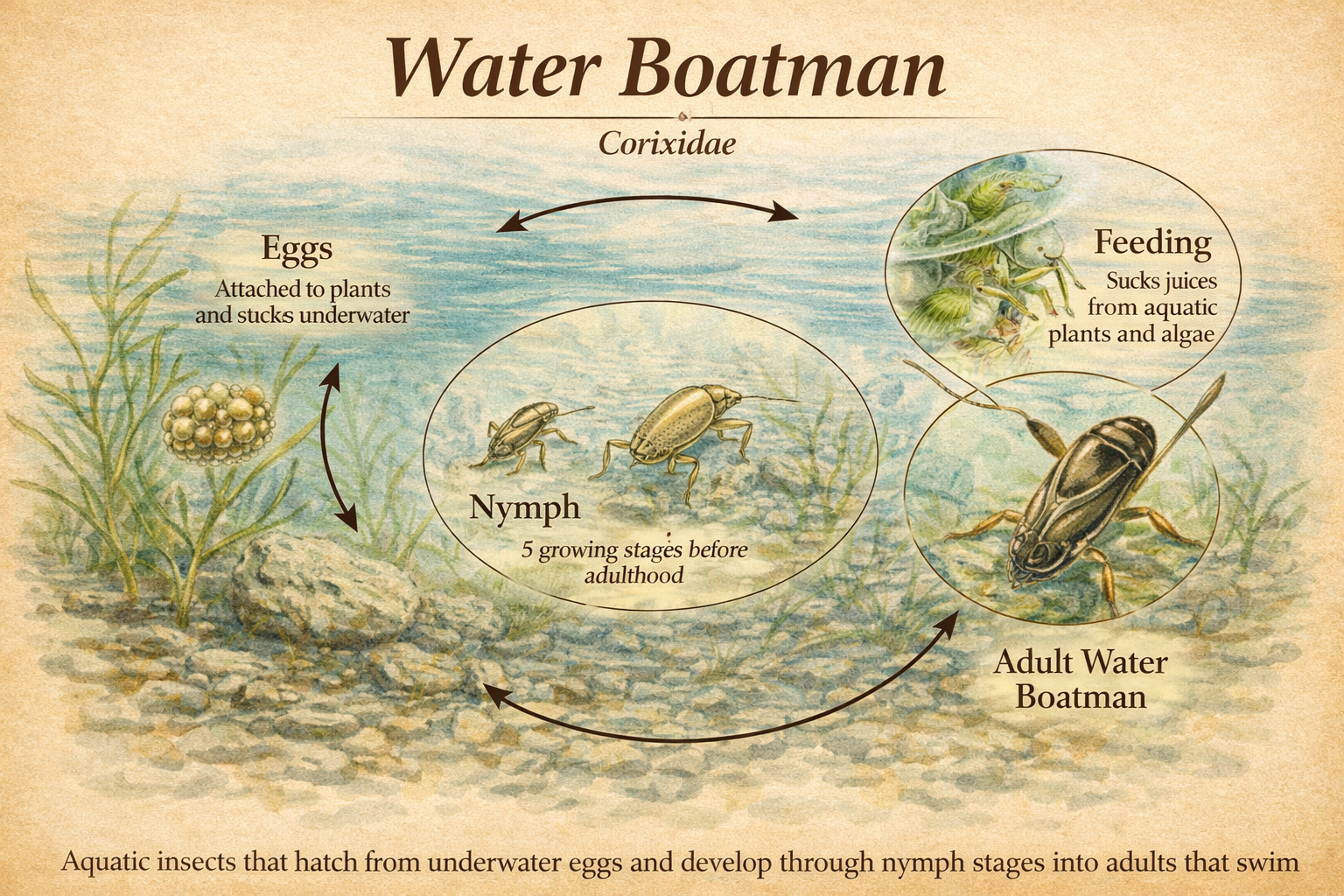
Water Boatman stillwater entomology reference artwork
QUICK READ

Quick read

What matters most on the water

Water Boatman fishing gets easier when you connect the insect's behaviour to your presentation choices. The cards below keep the main decisions tight and usable.

Primary Signal

Active swimmer / Fall favourite

Water boatman are one of the most exciting stillwater forage items because trout often feed on them with speed and intent.

Best Water

Where trout usually intercept them

Active shoals, weed edges, flats, and travel lanes where trout can intercept swimming insects.

LIFE CYCLE

Life cycle

Know the stage the trout are feeding on

Most missed stillwater opportunities come from fishing the wrong stage, not the wrong general bug.

  • Eggs are attached to plants and underwater structure.
  • Nymphs develop through several growth stages before adulthood.
  • Adults remain aquatic and swim actively, often migrating in numbers through the water column.
TACTICS

How to fish them

Line systems, casting approach, and retrieve

These are the practical decisions that usually matter most once you have identified the food source.

When

Best situations

  • Often strongest in late season windows when water boatman become highly visible and mobile.
  • Look for fish cruising shoals, weed edges, and mid-depth flats.
  • If trout are moving quickly and slashing rather than sipping, water boatman should be in the conversation.
Line Weights + Lines

Rods and systems

  • 6 weight rods are excellent because the takes are aggressive and the flies can be slightly wind resistant.
  • Intermediate lines are a top choice for keeping the fly in a moving horizontal path.
  • Floating lines can work in very shallow water or when fish are pinning them high.
  • Type 3 lines can help when fish are intercepting deeper migrations in wind or bright light.
Casting

Presentation setup

  • Fan-cast over active water to find the lane fish are using.
  • Let the fly settle briefly, then begin a confident retrieve.
  • Use straight casts that keep contact tight so the fly responds instantly.
Retrieve

Speed and movement

  • This is one of the few forage items that often wants a faster retrieve.
  • Use brisk 3 to 6 inch strips with brief pauses to imitate active swimming.
  • Change speed during the day until fish tell you whether they want panic or steady movement.
FIELD NOTES

Closing details

Most effective ways to actually catch fish on this food source

These are the small adjustments that usually turn follows and inspections into hooked trout.

  • Do not fish boatman too passively. Movement is usually the trigger.
  • When fish miss, keep the fly moving; many takes come on the restart.
  • Dark-backed patterns with a bright belly or hotspot often stand out well.

Field note: Use this page as a starting framework, then adjust depth, cadence, and fly size to the specific lake and the exact fish behaviour you are seeing that day.

BACK TO ENTOMOLOGY