Entomology Guide

Scuds

Scuds are not a headline hatch, but on the right lakes they are a foundation food source. That makes them one of the most important forage items to understand. Fish that are grubbing steadily on shoals and weed beds can often be taken consistently with the right scud size, colour, and slow movement.
Scuds stillwater entomology reference artwork
QUICK READ

Quick read

What matters most on the water

Scuds fishing gets easier when you connect the insect's behaviour to your presentation choices. The cards below keep the main decisions tight and usable.

Primary Signal

Freshwater shrimp / Year-round forage

Scuds are not a headline hatch, but on the right lakes they are a foundation food source.

Best Water

Where trout usually intercept them

Marl flats, weed tops, shallow shelves, and lakes with a heavy shrimp-rich food base.

LIFE CYCLE

Life cycle

Know the stage the trout are feeding on

Most missed stillwater opportunities come from fishing the wrong stage, not the wrong general bug.

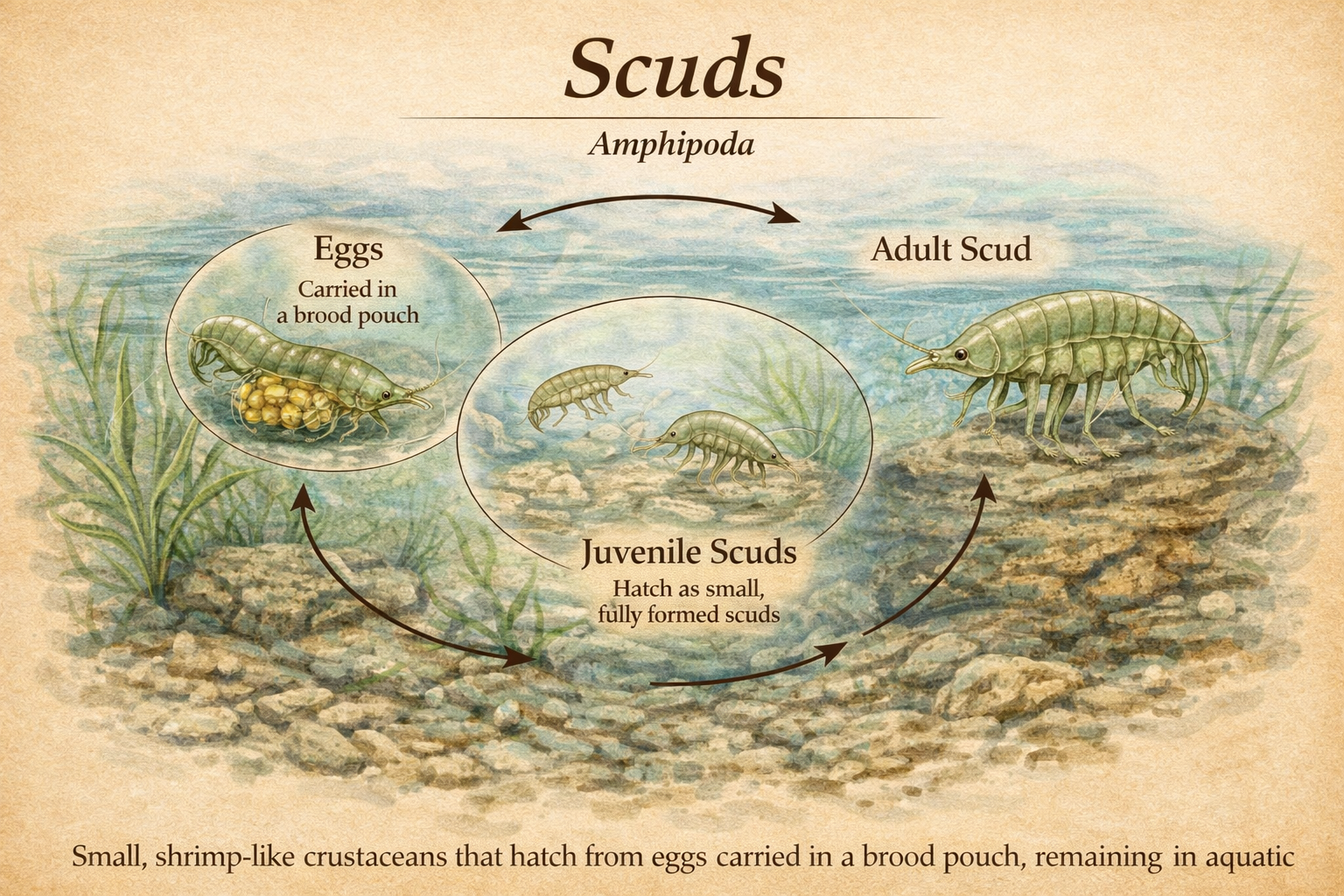
  • Scuds are crustaceans, not insects, and they remain aquatic for their entire life cycle.
  • They live around weeds, marl bottoms, and shallow feeding flats.
  • Because they are always present, trout can key on them for long stretches rather than in a short hatch event.
TACTICS

How to fish them

Line systems, casting approach, and retrieve

These are the practical decisions that usually matter most once you have identified the food source.

When

Best situations

  • Best on marl-bottom lakes, weedy lakes, and shallow flats with steady forage.
  • Excellent when trout are cruising methodically and not showing obvious hatch behaviour.
  • Strong through much of the season, especially in lakes known for shrimp-rich food chains.
Line Weights + Lines

Rods and systems

  • 5 or 6 weights are plenty for most scud situations.
  • Floating lines with long leaders work over shallow flats and weed tops.
  • Intermediate lines are often the best all-around system because they keep the fly in the upper feeding band without rising too much.
  • A slow-sink line is useful when wind drift pushes the fly too high in the column.
Casting

Presentation setup

  • Cast parallel to weed edges, across marl shelves, or ahead of cruising fish.
  • Avoid hard splashy landings in skinny water.
  • Use enough leader length to separate the fly from the line but keep connection for subtle takes.
Retrieve

Speed and movement

  • Scuds fish best slowly. Hand-twist, micro-strips, and long pauses are usually stronger than fast strips.
  • Let the fly hover and drift through the feeding lane.
  • If fish are following without eating, shorten the movement and add more pause time.
FIELD NOTES

Closing details

Most effective ways to actually catch fish on this food source

These are the small adjustments that usually turn follows and inspections into hooked trout.

  • Carry multiple shades: olive, tan, gray, and pinkish cream. Lake-specific colour matters.
  • A small amount of weight is often enough; too much kills the natural look.
  • Scud takes can feel like simple weight. Stay connected and lift smoothly.

Field note: Use this page as a starting framework, then adjust depth, cadence, and fly size to the specific lake and the exact fish behaviour you are seeing that day.

BACK TO ENTOMOLOGY