Home/Entomology/Mayflies

Entomology Guide

Mayflies

Mayflies are a major stillwater event because trout can feed on them at several stages: nymph, emerger, dun, and spent adult. The key is matching not only the insect, but the stage the fish are actually focused on. This page is built to help you fish mayflies with more precision instead of just guessing when you see adults on the water.
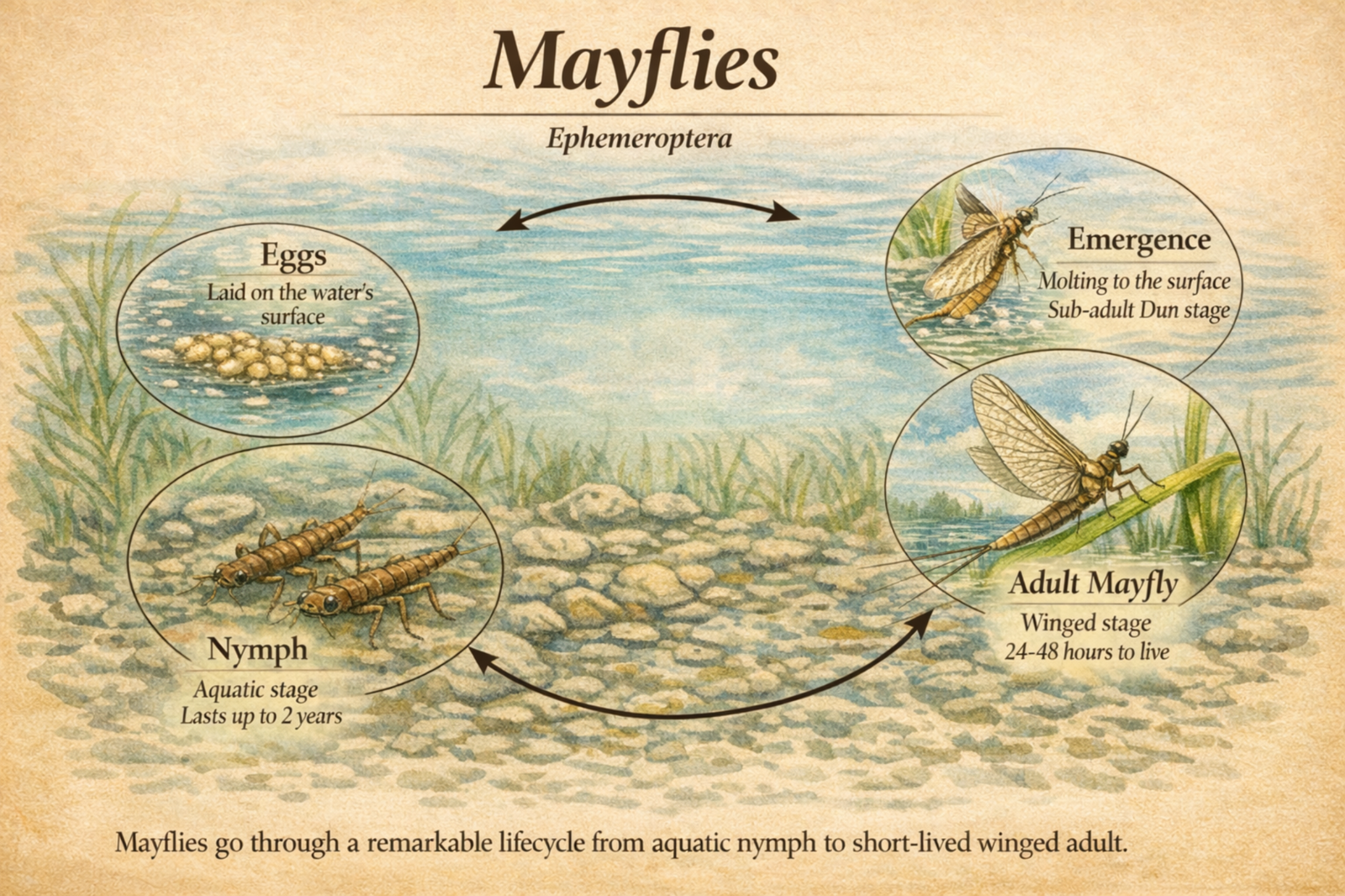
Mayflies stillwater entomology reference artwork
QUICK READ

Quick read

What matters most on the water

Mayflies fishing gets easier when you connect the insect's behaviour to your presentation choices. The cards below keep the main decisions tight and usable.

Primary Signal

Nymphs / Emergers / Duns

Mayflies are a major stillwater event because trout can feed on them at several stages: nymph, emerger, dun, and spent adult.

Best Water

Where trout usually intercept them

Shoals, weed edges, calm bays, and slick water lanes where nymphs rise and adults collect.

LIFE CYCLE

Life cycle

Know the stage the trout are feeding on

Most missed stillwater opportunities come from fishing the wrong stage, not the wrong general bug.

  • Eggs are deposited on or in the water and develop before hatching.
  • Nymphs live underwater for the majority of the cycle and can remain available to trout for long periods.
  • As emergence begins, nymphs rise and transform near the surface into the dun stage.
  • Adults ride the surface briefly, then mate, fall spent, and restart the cycle.
TACTICS

How to fish them

Line systems, casting approach, and retrieve

These are the practical decisions that usually matter most once you have identified the food source.

When

Best situations

  • Strong on calm mornings, evenings, and overcast windows when trout can inspect rising insects closely.
  • Mayfly nymphs matter well before the visible hatch, especially along shoals and weed edges.
  • During active emergence, fish often shift from subsurface takes to confident surface feeding.
Line Weights + Lines

Rods and systems

  • 5 weight rods are excellent for drys and emergers; 6 weights give more control in wind.
  • Floating lines are the first choice for drys, nymphs under an indicator, and greased-line presentations.
  • Intermediate lines are excellent for unweighted nymphs and emergers just under the surface film.
  • Carry both floating and intermediate systems so you can switch as fish move from nymphs to duns.
Casting

Presentation setup

  • For nymphs, cast ahead of travelling fish or along weedline lanes and keep the angle clean.
  • For emergers and adults, accuracy matters more than distance. Place the fly softly and avoid lining fish.
  • Use longer leaders in flat water and shorten slightly when wind ripple gives you cover.
Retrieve

Speed and movement

  • Mayfly nymphs usually fish best with a slow, deliberate strip or hand-twist.
  • Emergers should be moved very little; a subtle draw can imitate the final push to the surface.
  • Adults are usually dead-drifted, with only occasional tension to keep slack under control.
FIELD NOTES

Closing details

Most effective ways to actually catch fish on this food source

These are the small adjustments that usually turn follows and inspections into hooked trout.

  • Before the hatch, search with nymphs in olive, brown, and callibaetis-style tones.
  • During the hatch, watch whether fish are bulging subsurface or fully breaking the surface. That tells you emerger versus dry.
  • If fish refuse dries, drop back to an emerger or a floating line with a lightly sunk nymph.

Field note: Use this page as a starting framework, then adjust depth, cadence, and fly size to the specific lake and the exact fish behaviour you are seeing that day.

BACK TO ENTOMOLOGY