Entomology Guide

Caddis

Caddis can create some of the most active and visual feeding windows in stillwater. Trout often respond to caddis with more speed and aggression than they do to chironomids. That means your presentation often benefits from movement, but it still has to look natural.
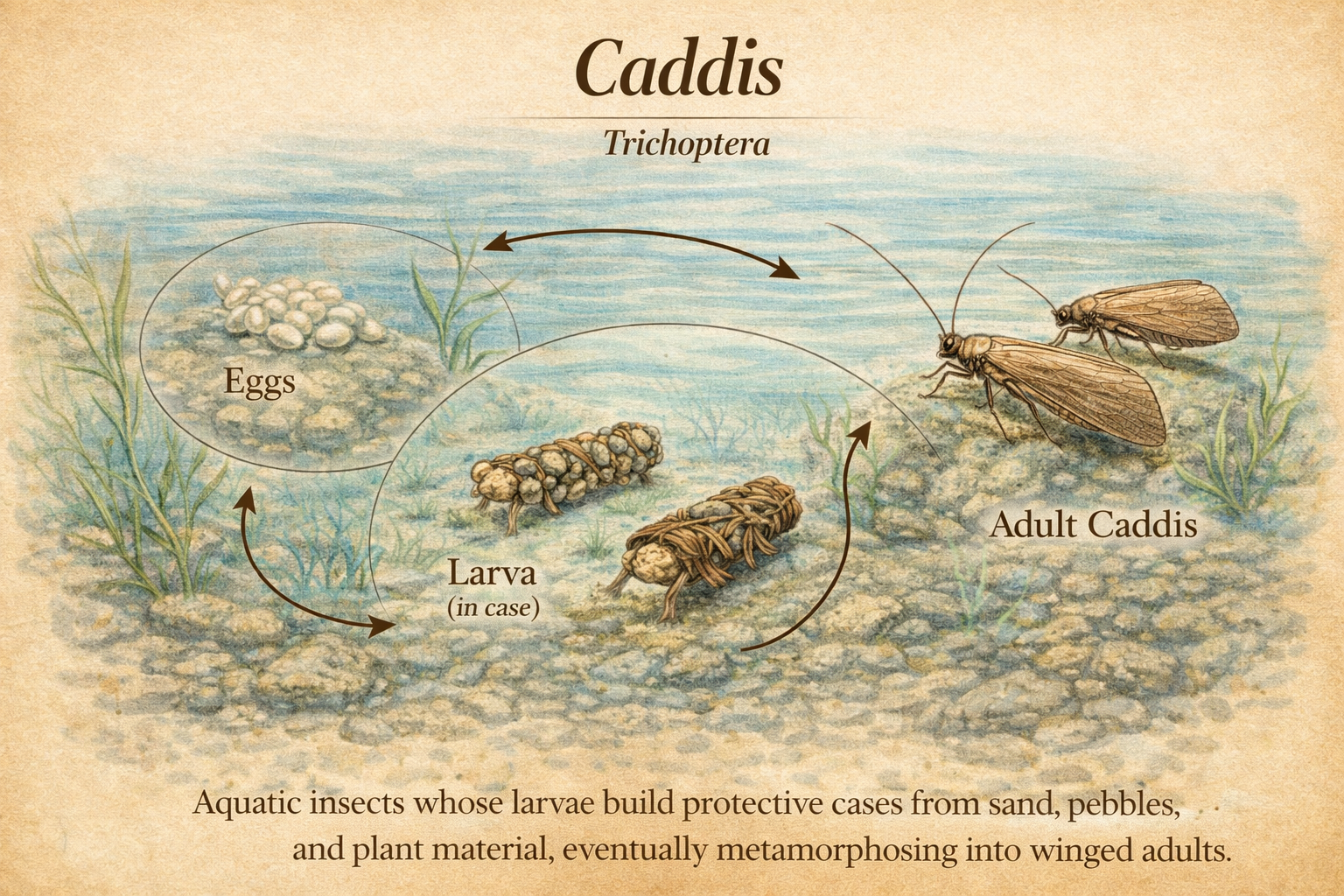
Caddis stillwater entomology reference artwork
QUICK READ

Quick read

What matters most on the water

Caddis fishing gets easier when you connect the insect's behaviour to your presentation choices. The cards below keep the main decisions tight and usable.

Primary Signal

Larva / Pupa / Adult

Caddis can create some of the most active and visual feeding windows in stillwater.

Best Water

Where trout usually intercept them

Weed edges, warmer bays, reed lines, and surface lanes where adults flutter and pupae ascend.

LIFE CYCLE

Life cycle

Know the stage the trout are feeding on

Most missed stillwater opportunities come from fishing the wrong stage, not the wrong general bug.

  • Eggs are laid on or near the water and develop into larvae.
  • Larvae live on the bottom or on vegetation, often inside protective cases depending on species.
  • Pupae rise toward the surface and become extremely vulnerable during ascent.
  • Adults skitter, flutter, and return to the surface to lay eggs.
TACTICS

How to fish them

Line systems, casting approach, and retrieve

These are the practical decisions that usually matter most once you have identified the food source.

When

Best situations

  • Most important when you see active movement near the surface or adults bouncing over the water.
  • Strong along weed edges, reed lines, shoals, and warm protected bays.
  • Can trigger fast takes late in the day when trout slide up in the water column.
Line Weights + Lines

Rods and systems

  • 5 or 6 weights are ideal for floating-line and intermediate-line caddis work.
  • Floating lines cover adults and shallow pupa effectively.
  • Intermediate lines are excellent when fish are taking just below the surface and ignoring true dries.
  • A type 3 line can be useful if trout are intercepting deeper ascending pupa on windy days.
Casting

Presentation setup

  • Cast across likely lanes rather than straight into the middle of nowhere. Structure matters.
  • For adults, use soft landings and avoid dragging the fly instantly.
  • For pupa, cast, count briefly, then start a controlled retrieve that suggests ascent.
Retrieve

Speed and movement

  • Caddis pupa respond well to short pulls mixed with pauses.
  • Adults can be dead-drifted, twitched, or skated lightly depending on trout behaviour.
  • When fish are slashing, do not over-strip. Let the fly stall between movements.
FIELD NOTES

Closing details

Most effective ways to actually catch fish on this food source

These are the small adjustments that usually turn follows and inspections into hooked trout.

  • Keep both pupa and adult patterns ready at the same time. Fish can switch stages quickly.
  • If you get boils but no hookups, your fly may be riding too high. Drop to an emerger.
  • Wind lanes and the protected edge of a ripple seam are prime caddis water.

Field note: Use this page as a starting framework, then adjust depth, cadence, and fly size to the specific lake and the exact fish behaviour you are seeing that day.

BACK TO ENTOMOLOGY