Home/Entomology/Backswimmers

Entomology Guide

Backswimmers

Backswimmers are another active aquatic bug that can produce violent trout takes. They are often confused with water boatman, but they behave differently and tend to ride higher in the water. The payoff for fishing them well is often explosive, visual eats.
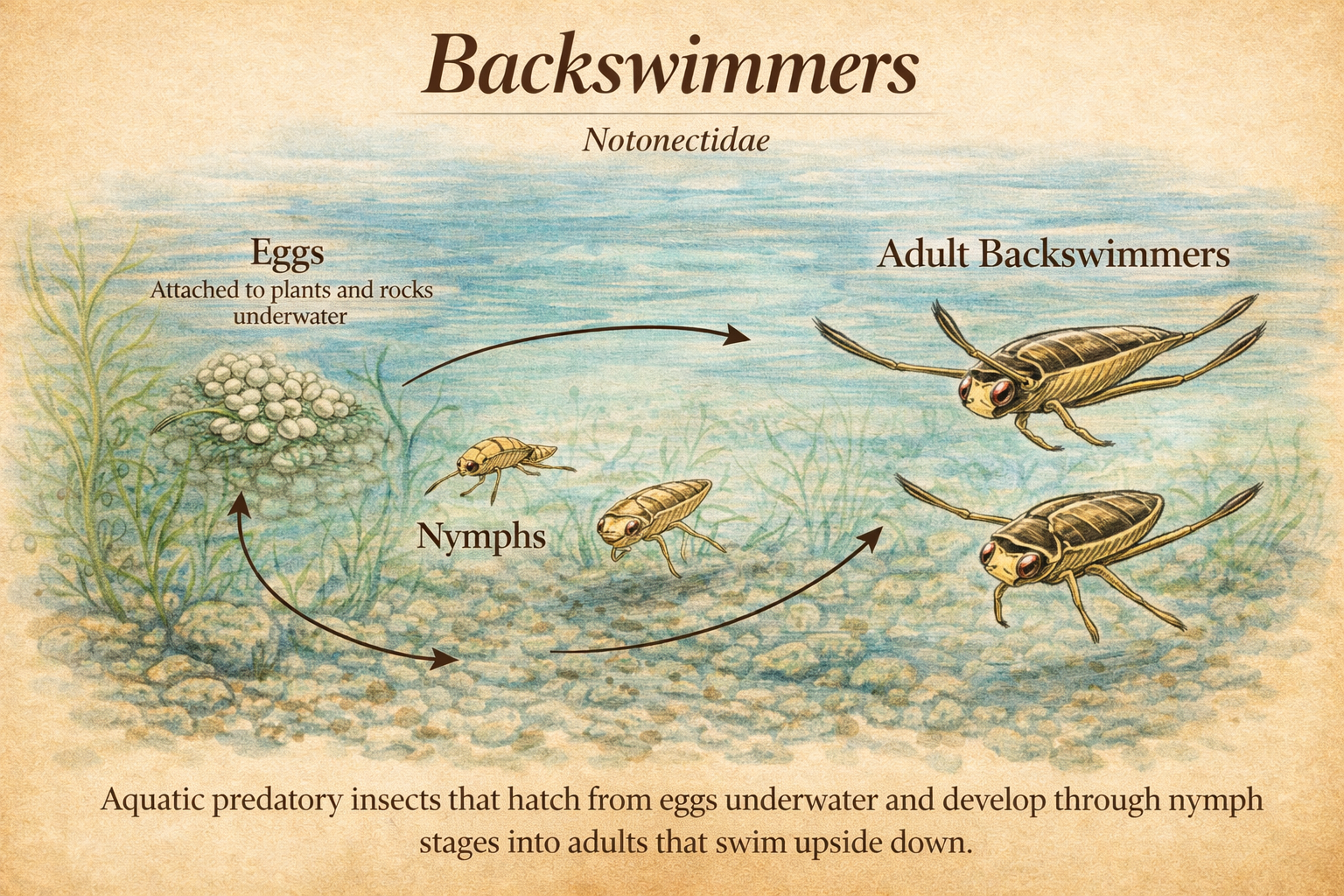
Backswimmers stillwater entomology reference artwork
QUICK READ

Quick read

What matters most on the water

Backswimmers fishing gets easier when you connect the insect's behaviour to your presentation choices. The cards below keep the main decisions tight and usable.

Primary Signal

Surface-oriented swimmer

Backswimmers are another active aquatic bug that can produce violent trout takes.

Best Water

Where trout usually intercept them

Upper water column over shoals and flats where trout are looking up and hunting mobile prey.

LIFE CYCLE

Life cycle

Know the stage the trout are feeding on

Most missed stillwater opportunities come from fishing the wrong stage, not the wrong general bug.

  • Eggs are laid on aquatic vegetation and submerged surfaces.
  • Immature stages grow in the water and remain active predators or swimmers.
  • Adults continue swimming and often hold close to the surface film.
TACTICS

How to fish them

Line systems, casting approach, and retrieve

These are the practical decisions that usually matter most once you have identified the food source.

When

Best situations

  • Most important when trout are cruising just under the surface and making sharp directional changes.
  • Especially good on warm calm periods when fish are willing to hunt upward.
  • If fish are porpoising or intercepting moving prey high, backswimmers are worth testing.
Line Weights + Lines

Rods and systems

  • 5 or 6 weight rods are both suitable.
  • Floating lines and hover/intermediate lines are the main systems.
  • You generally want to keep the fly high in the column rather than dredging it.
Casting

Presentation setup

  • Cast into travel lanes, not just at random open water.
  • Keep enough line control to start the fly immediately after it lands.
  • Use slightly shorter leaders than with pure chironomid work so the fly reacts crisply.
Retrieve

Speed and movement

  • Fish these with animated strips, pauses, and sudden restarts.
  • A quick pull followed by a stall often triggers the hit.
  • Near-surface movement is the key, so avoid letting the fly sink too deep before working it.
FIELD NOTES

Closing details

Most effective ways to actually catch fish on this food source

These are the small adjustments that usually turn follows and inspections into hooked trout.

  • If trout are swiping and missing, shorten your pauses.
  • Watch for follows near the boat because many takes happen late.
  • Carry black, olive, and natural tan variations for changing light.

Field note: Use this page as a starting framework, then adjust depth, cadence, and fly size to the specific lake and the exact fish behaviour you are seeing that day.

BACK TO ENTOMOLOGY